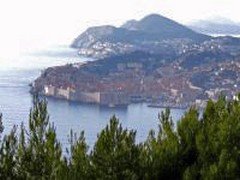
I have to express a slight dosage of disappointment, having recently read a comment, posted by a tourist whose exploration of Dubrovnik was exhausted after a mere day. Apparently, he «got fed up» with a cascade of various shadows of «red» that is including crimson and terracotta, which are donning the roofs of the Old Town's houses.
Dubrovnik is a destination for a culture-vulture meets nature type of a person. Moreover, a lot of modern day values are continuation of the past events' lessons that some of us have even learnt in recent times. My point, well Dubrovnik was the first town in Europe which had a pharmacy and during the reign of Dubrovnik Republic, it was amongst the first world stage states to have recognized the American Independence.
It is that adage «Forget your own private matters and turn to the State affairs» which the Town's ruling class was reminded each time they were entering the so called «boardroom» of power sharing.
By now, you are probably asking, what is this chap on about? Well, I do support the idea that sport on holiday is a good thing as long as you are organized in advance ( the chap you was not impressed by shades of red on the Old Town's was saved by waterspouts ) but I would stress that old chestnut of «When you are in Rome, behave like Romans do».
It helps a lot....
Friday, June 8, 2007


Saturday, May 5, 2007
Srdj Hill
There is something about Srdj Hill, which is overlooking Dubrovnik, somewhat it is nature's answer to a sacred hand of St Blaise, a saint protector of Dubrovnik. The panoramic view ahead acts as an antidote to an eye which is filled with the overwhelming view of the Old Town and the sea horizon. A large number of tourists go here to enjoy Panorama of Dubrovnik and I believe some are acquainted with the fact that this is a shrine in itself as a large number of freedom fighters in Croatia Independence War, gave their lives so that one day visitors can feel that air of freedom.
Once upon the time and long ago, Srdj Hill was dense with oak trees so it does not come as a surprise that this sacred wood was a target of numerous attacks by Venetians, who were seeking any opportunity to expand their own merchant navy fleet by cutting down oak trees, looting them and shipping them back to Venice.
However, very few people know about another peak, Velji Do, which offers even more imposing view, this time of Elaphiti Islands. This is a gem photo opportunity to capture this archipelago which was named after a Greek word ELAPHOS. Apparently, viewed from the bird's eye perspective they resemble a deer, hence a Greek world.
You learn something new every day, so they say!
Once upon the time and long ago, Srdj Hill was dense with oak trees so it does not come as a surprise that this sacred wood was a target of numerous attacks by Venetians, who were seeking any opportunity to expand their own merchant navy fleet by cutting down oak trees, looting them and shipping them back to Venice.
However, very few people know about another peak, Velji Do, which offers even more imposing view, this time of Elaphiti Islands. This is a gem photo opportunity to capture this archipelago which was named after a Greek word ELAPHOS. Apparently, viewed from the bird's eye perspective they resemble a deer, hence a Greek world.
You learn something new every day, so they say!
Friday, May 4, 2007
Lapad Peninsula - Dubrovnik
I have been visiting Thorn Tree chat forum for a while now and I try to take part as much as possible as I value Lonely Planet's country guides. Dubrovnik is one of the most sought after destinations in Croatia and people always ask about accommodation. I have a personal viewpoint on the matter as I believe that in order to enjoy Dubrovnik experience; one has to think carefully about where they decide to stay. It goes without saying that I am a great believer of value for money bargains but to start with I stop short of renting a bed in a private house. The reason is simple, I refuse to be touted at port or bus terminal with a possibility of a wobbly bed in the Old Town, where I might be at health hazard. There are so many villas and apartments to choose from that it simply does not make sense to risk it.
Lapad Peninsula is an oasis of peace and quiet and the bus no: 6 takes you to Pile Gate. It has a shopping centre, lots of restaurants, local food produce stalls and it is not far away from nearby Copacabana beach, not to be confused with Brazilian one.
All in all, cozy little part of Dubrovnik, worth staying in.
Lapad Peninsula is an oasis of peace and quiet and the bus no: 6 takes you to Pile Gate. It has a shopping centre, lots of restaurants, local food produce stalls and it is not far away from nearby Copacabana beach, not to be confused with Brazilian one.
All in all, cozy little part of Dubrovnik, worth staying in.
Not all is fair in ...
I have recently come across a rather negative practice. I spoke to a very good friend of mine who lives abroad and he told me a story about a friend of his who happened to be on a visit to Dubrovnik. The gentleman was a banker for a well known City of London corporation. His hectic style of living meant that his secretary forgot to book a cab for Dubrovnik trip. The banker was going to Dubrovnik having previously arrived to London from a long haul business trip. Once he landed at Dubrovnik Airport he jumped into a cab and rounded his fare to hotel Excelsior to HRK 200. He is accustomed to different currencies as he works on the money exchange. He told a friend of mine that he fell in love with the Old Town. As he is an eager «culture-vulture» beaver, he spent a day in Mostar as he has been told that the town has architectural remains from the Ottoman period.
He was leaving Dubrovnik full of impressions until he ordered a cab from a reception desk to take him back to the airport. Everything was running smooth until he was asked to pay HRK 300. He paid for his fare without batting an eyelid, cool and composed. However, he complained to a friend of mine saying that this malpractice ruins the beauty of Dubrovnik and it is not a way forward to European integration!
He was leaving Dubrovnik full of impressions until he ordered a cab from a reception desk to take him back to the airport. Everything was running smooth until he was asked to pay HRK 300. He paid for his fare without batting an eyelid, cool and composed. However, he complained to a friend of mine saying that this malpractice ruins the beauty of Dubrovnik and it is not a way forward to European integration!
Saturday, April 21, 2007
Dubrovnik Vignette
There are times when one feels privileged to have been born and bred Dubrovnik «folk». Although I have used this Americanism carefully and for the all right reasons. Back in the golden age of Dubrovnik Republic, during the renaissance boom of merchant navy prosperity, the town was ruled by influential families who for there part have been passing the echelons of power from generation to generation.
Their legacy is the opium for our eyes as such is the beauty of Dubrovnik Old Town. But their ability to preserve their hereditary status, by the odds of the nature, remained all but in the name. Yet, I bet there are very few who spot their summer residence palaces in the small villages of Cajkovici and Sustjepan, us forgetting that at the time and place, Dubrovnik Old Town was protected by city walls and wooden moats were guarding Pile and Ploce gates. Everything outside this domain was considered as countryside. I spotted two virtually abandoned summer palaces, one in the grave need of restoration and with the latest property and tourism boom I sincerely hope that some rich soul would recognize their historical significance and continue in the footsteps of the noble tradition.
www.dreampropertycroatia.com
Their legacy is the opium for our eyes as such is the beauty of Dubrovnik Old Town. But their ability to preserve their hereditary status, by the odds of the nature, remained all but in the name. Yet, I bet there are very few who spot their summer residence palaces in the small villages of Cajkovici and Sustjepan, us forgetting that at the time and place, Dubrovnik Old Town was protected by city walls and wooden moats were guarding Pile and Ploce gates. Everything outside this domain was considered as countryside. I spotted two virtually abandoned summer palaces, one in the grave need of restoration and with the latest property and tourism boom I sincerely hope that some rich soul would recognize their historical significance and continue in the footsteps of the noble tradition.
www.dreampropertycroatia.com
Sunday, April 15, 2007
Peljesac Region Wines:
I must confess I am not a wine buff, not even one in making but my last visit to Croatia's Peljesac peninsula has made a surprising impact on my well being. To begin with, I was taken back by the beauty of nature and I could not believe sights of thick pine woods we encountered by the road, nor could I stop admiring Ston, a hamlet with a European prototype of a Chinese wall. This historical monument was enacted to ward off the attempts of numerous Turkish invasions during 15th and 16th century to get hold of Ston's sea salt processing plant.
Wine growing was the only way out from poverty trap for Peljesac farmers because nothing more was profitable to cultivate apart from oysters and mussles in the Bay of Ston. Economic migration within peninsula was out question as each village was guarding its habitants for the sake of security and even preservation of its own identity.
Our visit to Matusko winery was a pleasant event. Decorated in local stone, it was giving a slightly modern ambience but on close inspection, dust gathered on bottles was for real.
I learnt that «plavac» - grape sort, was a «father» to Zinfandel and Grgic family, who emigrated to the US between the WW1 and WW2, introduced this sort to the Nappa Valley region.
As far as I could make it Postup, Posip and Dingac are all from the «plavac family».Their esquisity and richness in tannins is a result of the constant exposure to sun and the ground whose mixture is a balance of rich and poor soil.
Wine tour is an event worth visiting if for nothing but the landscape which has blessed the fishermen and made farmers work harder to achieve the richness of local wine.
Wine growing was the only way out from poverty trap for Peljesac farmers because nothing more was profitable to cultivate apart from oysters and mussles in the Bay of Ston. Economic migration within peninsula was out question as each village was guarding its habitants for the sake of security and even preservation of its own identity.
Our visit to Matusko winery was a pleasant event. Decorated in local stone, it was giving a slightly modern ambience but on close inspection, dust gathered on bottles was for real.
I learnt that «plavac» - grape sort, was a «father» to Zinfandel and Grgic family, who emigrated to the US between the WW1 and WW2, introduced this sort to the Nappa Valley region.
As far as I could make it Postup, Posip and Dingac are all from the «plavac family».Their esquisity and richness in tannins is a result of the constant exposure to sun and the ground whose mixture is a balance of rich and poor soil.
Wine tour is an event worth visiting if for nothing but the landscape which has blessed the fishermen and made farmers work harder to achieve the richness of local wine.
Subscribe to:
Posts (Atom)